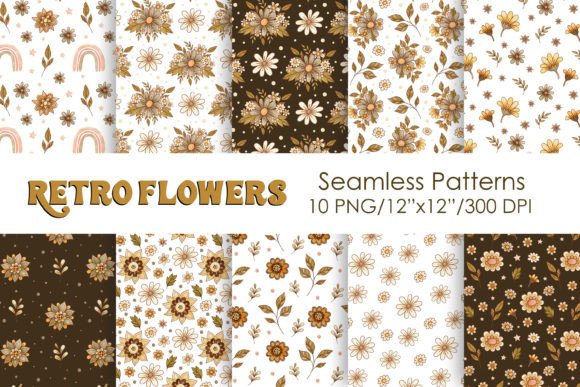
Retro Flowers Seamless Patterns
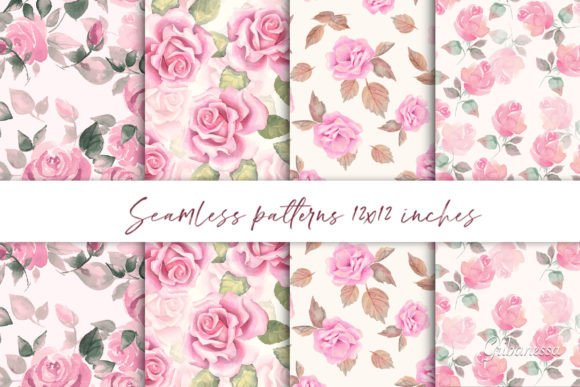
If you’ve ever scrolled through design marketplaces searching for that perfect vintage botanical backdrop—something with soft pastel palettes, gentle curves, and unmistakable 1960s–70s charm—you know how rare it is to find seamless patterns that *actually* tile without visible seams *and* hold up beautifully at print resolution. Retro Flowers Seamless Patterns fills that gap thoughtfully: a tightly curated set of 10 high-fidelity, hand-crafted floral motifs designed not just to look nostalgic—but to work reliably across real creative workflows.
What Makes These Patterns Truly Seamless—and Why That Matters
“Seamless” isn’t just marketing jargon here—it’s functional precision. Each pattern in the Retro Flowers Seamless Patterns collection is built on a 3600×3600 px canvas at 300 dpi, meaning it scales cleanly from business card size all the way to large-format wall posters or sublimation-printed apparel. Unlike low-res JPEGs or loosely tiled SVGs that blur or misalign when repeated, these PNGs were tested across multiple tiling methods (Photoshop’s “Offset” filter, Illustrator’s Pattern Options, Canva’s background repeat) to ensure edges blend invisibly—no manual touch-ups needed.
This reliability shines most when time is tight. Imagine designing a batch of wedding stationery at midnight: you drop one of these patterns into your invitation layout, scale it to cover the full bleed area, and hit “print.” No pixelated joins. No awkward white lines between tiles. Just quiet confidence that what you see on screen matches what arrives from the printer.
Where These Patterns Show Up in Real Creative Work
The beauty of Retro Flowers Seamless Patterns lies in its quiet versatility—not flashy, but deeply useful across disciplines:
- Sublimation crafters love the clean edges and consistent color density—especially for mugs, tote bags, and ceramic tiles where subtle gradients and fine linework need to survive heat transfer without smudging or banding.
- Small-batch stationery makers use them as textured backgrounds behind handwritten calligraphy on greeting cards or foil-stamped tags—giving handmade pieces a polished, cohesive feel without overpowering the typography.
- Blog and social media designers layer them softly (at 5–15% opacity) beneath quote graphics or newsletter headers to add warmth and personality—without sacrificing readability or loading speed.
- Indie apparel brands apply them directly to T-shirt mockups or integrate them into larger garment repeats (like lining pockets or cuffs), leaning into retro aesthetics without leaning on clichéd sunburst or peace sign motifs.
- Digital scrapbookers treat them like fabric swatches—dragging them into layered PSD templates to build memory pages with tactile depth, especially for baby announcements, graduation albums, or travel journals.
Who Benefits Most—and How Their Needs Shape Usage
A freelance graphic designer building a brand identity for a boutique herbal tea company might choose the muted sage-and-cream daisy pattern to echo apothecary labels and packaging—then scale it down for social post borders and up for store window decals. The same file serves three distinct purposes, maintaining visual continuity without licensing complications.
Meanwhile, a hobbyist planning a backyard garden party may download the set simply to customize printable banners, cupcake toppers, and photo booth props. Here, ease matters more than technical nuance: they open the ZIP, drag a PNG into Canva, adjust brightness if needed, and go—no color profile wrestling, no missing fonts, no “how do I make this repeat?” panic.
Even educators creating classroom resources find value—using the softer floral patterns as gentle background textures for reading worksheets or vocabulary flashcards, reducing visual fatigue while keeping things age-appropriate and engaging.
Things to Keep in Mind Before You Start Designing
While Retro Flowers Seamless Patterns is intentionally flexible, a few practical considerations help avoid hiccups:
- Color mode matters. These are RGB PNGs—ideal for digital use and most print-on-demand services. If you’re sending files to a traditional offset printer, check whether they require CMYK conversion first (some do; many modern POD platforms don’t).
- Transparency isn’t included. Each pattern has a solid white background—a deliberate choice for stability across platforms (Canva, Cricut Design Space, Silhouette Studio). If you need transparency, you can easily remove the white background in Photoshop or Photopea—but know that doing so may affect how subtle shadows or blended edges render.
- Scale with intention. Because these patterns include fine details (veins on leaves, delicate stamen strokes), shrinking them below ~15% of original size may cause loss of clarity. For tiny applications—like stitching guides or micro-printed labels—test at actual output size before finalizing.
- Licensing is straightforward—but worth noting. The package grants unlimited personal and commercial use, including resale on physical products (mugs, shirts, notebooks) and digital goods (Canva templates, Procreate brushes). It does *not* allow redistribution of the raw PNG files as standalone assets.
Why This Collection Stands Out Among Retro-Inspired Options
There’s no shortage of “vintage floral” downloads online—but many rely on scanned clipart, AI-generated filler, or overused vector bundles that lack cohesion. Retro Flowers Seamless Patterns stands apart because every motif shares a unified sensibility: balanced negative space, intentional imperfection (slight line wobble, organic petal variation), and color palettes pulled from authentic mid-century textile swatches—not algorithmically generated pastels.
You’ll notice the difference when printing: no muddy grays, no oversaturated magentas bleeding into adjacent colors. Just clean, confident repetition that feels both nostalgic and freshly made.
Real Projects, Not Just Possibilities
One customer used the lavender-and-mint geranium pattern to design custom wrapping paper for a local florist’s holiday gift boxes—printed on kraft stock, then hand-stamped with gold foil accents. Another stitched it onto linen napkins using an embroidery machine, scaling the pattern to match thread-count density. A third embedded it into a Shopify product page background, setting it to fixed position so it anchored the scroll without competing with product photos.
None of those uses were “instructed.” They emerged from people solving actual problems—with tools that behaved predictably, looked authentically retro, and didn’t demand extra steps or expertise.
That’s the quiet strength of Retro Flowers Seamless Patterns: it doesn’t ask you to adapt to it. It adapts—gracefully—to how you already create.