Halloween Seamless Patterns: A Practical Guide for Crafters and Designers
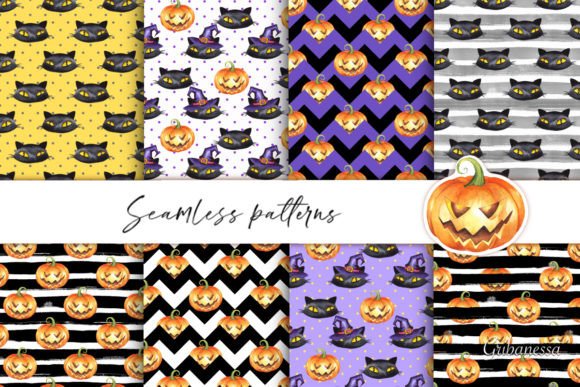
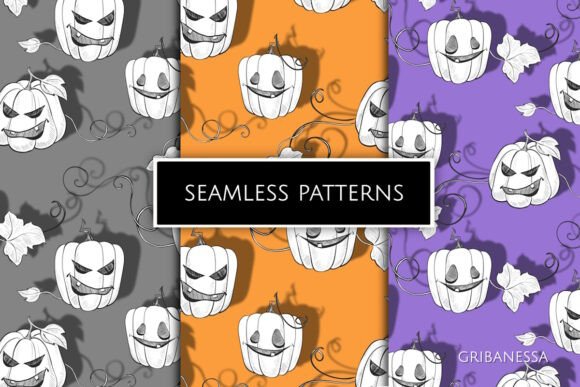
Seamless Halloween patterns offer a versatile, scalable foundation for seasonal creative work—whether you’re designing greeting cards, printing fabric for costumes, or building digital scrapbook kits. The Halloween. Set of Seamless Patterns is a focused digital resource comprising three high-resolution JPG files (3600×3600 pixels, 300 dpi), each delivering a repeatable motif optimized for real-world applications. Unlike generative tools or low-res clipart bundles, this set prioritizes print-ready fidelity and intentional design cohesion across motifs—pumpkins, bats, ghosts, or stylized black-and-orange geometrics—without relying on mockups or layered PSDs.
What Sets This Halloween Pattern Set Apart
The Halloween. Set of Seamless Patterns distinguishes itself through resolution integrity and format simplicity. At 3600×3600 px and 300 dpi, each file maintains crisp detail when scaled for large-format wall art, fabric yardage, or invitation suites—unlike many free pattern downloads that max out at 72 dpi or 1200×1200 px, risking pixelation in print. Because the files are delivered as flat JPGs—not layered PSDs, SVGs, or AI files—they load instantly into any design software (Adobe Photoshop, Affinity Designer, Cricut Design Space, Canva) without compatibility concerns. That simplicity also means no learning curve around vector paths or transparency settings—just drag, tile, and apply.
Crucially, the patterns are truly seamless: edges align without visible breaks or color shifts when repeated. This isn’t achieved through automated tiling algorithms but through manual alignment and visual balancing—a detail that matters when wrapping a gift box or printing continuous fabric. You’ll notice consistent line weight, balanced negative space, and restrained color palettes (typically black, orange, deep purple, ivory) that avoid oversaturation—making them easier to recolor or layer over photos without clashing.
How It Compares to Other Pattern Sources
When evaluating options, it helps to consider tradeoffs across categories: resolution vs. flexibility, convenience vs. customization, and cost vs. long-term utility.
- Free pattern libraries (e.g., public domain sites or design tool built-in assets) often provide broad variety but inconsistent quality. Many lack true seamlessness, contain watermarks, or restrict commercial use—limiting their viability for small-business owners selling handmade cards or printed stationery.
- Subscription-based pattern services grant access to thousands of motifs but require ongoing fees and may include lower-resolution previews. You might pay monthly for access to dozens of Halloween patterns you’ll only use once—or miss subtle alignment flaws until after printing.
- Custom illustration commissions offer full uniqueness but involve lead time, budget (often $200–$800+ per motif), and revision cycles. For crafters needing reliable, on-demand assets for annual projects, that level of investment rarely scales.
- Vector pattern packs (e.g., EPS or SVG sets) support infinite scaling and recoloring—but demand familiarity with vector editors. If your workflow centers on raster-based tools like Procreate or basic photo editors, the extra step of converting or rasterizing vectors adds friction.
The Halloween. Set of Seamless Patterns occupies a middle ground: higher fidelity than most free resources, lower overhead than subscriptions or custom work, and broader software compatibility than vector-only packs. It doesn’t replace specialized tools—but fills a specific gap where reliability, print readiness, and immediate usability matter more than infinite scalability or editable layers.
Real-World Use Cases and Practical Fit
This set works best when your goal is efficiency without compromise—especially for recurring or deadline-sensitive projects. Consider these examples:
- A small-batch stationer preparing Halloween invitations: They import one pattern into Canva, tile it as a background, overlay text, and export print-ready PDFs—all within 20 minutes. No need to adjust spacing or fix seam lines.
- A fabric designer prototyping a limited-run apron collection: They scale the pattern to match standard fabric repeat dimensions (e.g., 24″ × 24″), send the file directly to a print-on-demand partner, and receive physical swatches in under a week.
- A teacher creating classroom decorations: They print the pattern on cardstock, cut shapes for bulletin boards, and laminate them—knowing the design will remain sharp even after multiple laminations and repositioning.
It’s less ideal if you need editable elements (e.g., isolating individual bats to rearrange), transparent backgrounds for web overlays, or animated versions for social media. Since mockups aren’t included, you’ll source or build those separately—useful for portfolio presentation but not required for production.
Key Decision Factors to Weigh
Before choosing the Halloween. Set of Seamless Patterns, reflect on these practical considerations:
- Your output medium: If you primarily create for print—invitations, paper crafts, fabric, or wall decals—this set delivers what you need. For web-first projects requiring transparency or animation, supplement with PNG exports or other formats.
- Your software fluency: If you regularly use raster editors (Photoshop, GIMP, Affinity Photo) or all-in-one tools (Canva, Cricut), JPGs integrate smoothly. If your workflow depends on vector manipulation (e.g., adjusting stroke width on ghost outlines), you’ll need to trace or convert manually—or seek a vector alternative.
- Your volume and reuse needs: One set supports dozens of distinct outputs across years. But if you produce dozens of themed collections annually (e.g., “Halloween,” “Day of the Dead,” “Autumn Harvest”), bundling multiple pattern sets may offer better value than purchasing piecemeal.
- Your brand or style consistency: These patterns share a cohesive aesthetic—hand-drawn texture, balanced contrast, moderate detail. If your brand leans toward hyper-minimalist line art or maximalist collage, test how well the motifs integrate before committing.
When Another Option Might Be Better
The Halloween. Set of Seamless Patterns isn’t universally optimal. Consider alternatives if:
- You require transparent backgrounds for digital overlays or layered web graphics—JPGs don’t support alpha channels. In that case, seek PNG versions or generate transparency yourself using selection tools.
- You’re building a design system with strict color constraints (e.g., Pantone-matched branding)—while the base palette is neutral, recoloring JPGs requires raster editing skill and may mute fine details.
- You need multi-scale variants (e.g., one pattern sized for business cards, another for banners)—this set provides one resolution; resizing down is safe, but extreme upscaling beyond 3600×3600 px risks softness.
- You prioritize sustainability in digital assets—JPGs are widely supported but less editable over time than open formats like SVG. Long-term archivists may prefer vector sources for future adaptability.
None of these disqualify the set—they simply clarify context. Many users find that pairing this resource with one or two complementary tools (e.g., a free color-picker extension for quick recoloring, or a simple mockup generator for client presentations) bridges functional gaps without adding complexity.
Final Thoughts for Informed Selection
Choosing pattern resources isn’t about finding the “best” option—it’s about matching capabilities to intent. The Halloween. Set of Seamless Patterns excels where clarity, consistency, and production readiness converge: for makers who value time, predictability, and print fidelity over theoretical flexibility. It reflects a pragmatic understanding of how people actually work—dragging files into familiar tools, meeting seasonal deadlines, and iterating across physical and digital outputs without restarting from scratch each time.
If your projects demand precision at scale, minimal setup, and seasonal relevance without bloat, this set offers grounded utility. If your goals center on experimentation, granular control, or cross-platform adaptability, weigh how much overhead you’re willing to absorb—and whether that effort yields meaningful returns for your specific workflow.